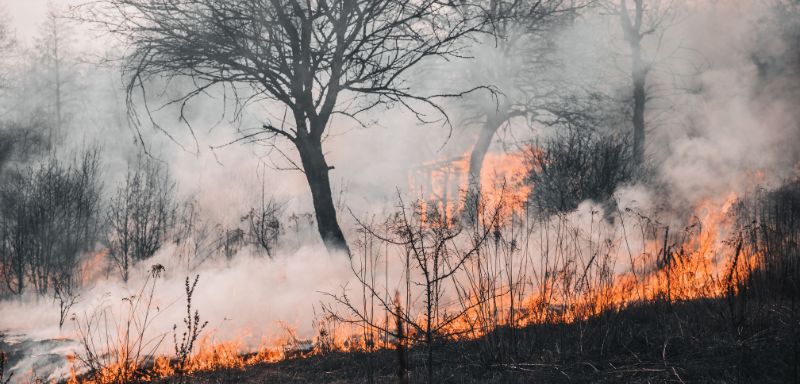
NYC and the Tri-State are seeing visible smoke and hazy skies, which are causing spikes in smoke-related pollution due to the smoke from the wildfires in Canada. Friday, there is expected to be some improvement, but only temporarily as on Friday night and Saturday there will be a resurgence before the showers and thunderstorms clear the air.
The particles from the wildfire smoke can cause shortness of breath, coughing, dizziness, or fatigue and can aggravate heart and lung diseases and other chronic health issues. Experts suggest that everyone reduce outdoor activities that are outdoor and also wear an N95 mask if you have to go outside. You can keep the indoor air clean by closing windows and running an air purifier or air conditioner.
The Wildlife Conservation Society says that all five of its Wildlife Conservation Summer camp programs have shifted to indoor summer camp programs, and live interpretation programs have been shortened or moved indoors to focus on the safety of guests and animals.
An updated Air Quality Advisory for Friday is as follows: The Western NY region is forecast to reach Very Unhealthy; the Central NY region is forecast to reach Unhealthy, and the Long Island, Metro, and Lower Hudson Valley regions are forecast to reach Unhealthy for Sensitive Groups. It remains in effect until 11:59 P.M.
Wearing a mask can help anyone who works outdoors, is more sensitive to smoke, or is in a high-risk group, but it has to be the right mask. The best kind of mask to protect you is a N65. Wildfire smoke is made up of fine solids, gases, and fine particles, which are known as PM2.5. PM2.5 is the most concerning as they can easily enter the nose and throat and can travel to the lungs where they can get trapped and can circulate into the bloodstream.
PM2.5 can cause both short-term health effects, even for healthy people, including irritation of the eyes, nose, and throat, and long-term effects such as worsening of conditions including asthma and heart disease.