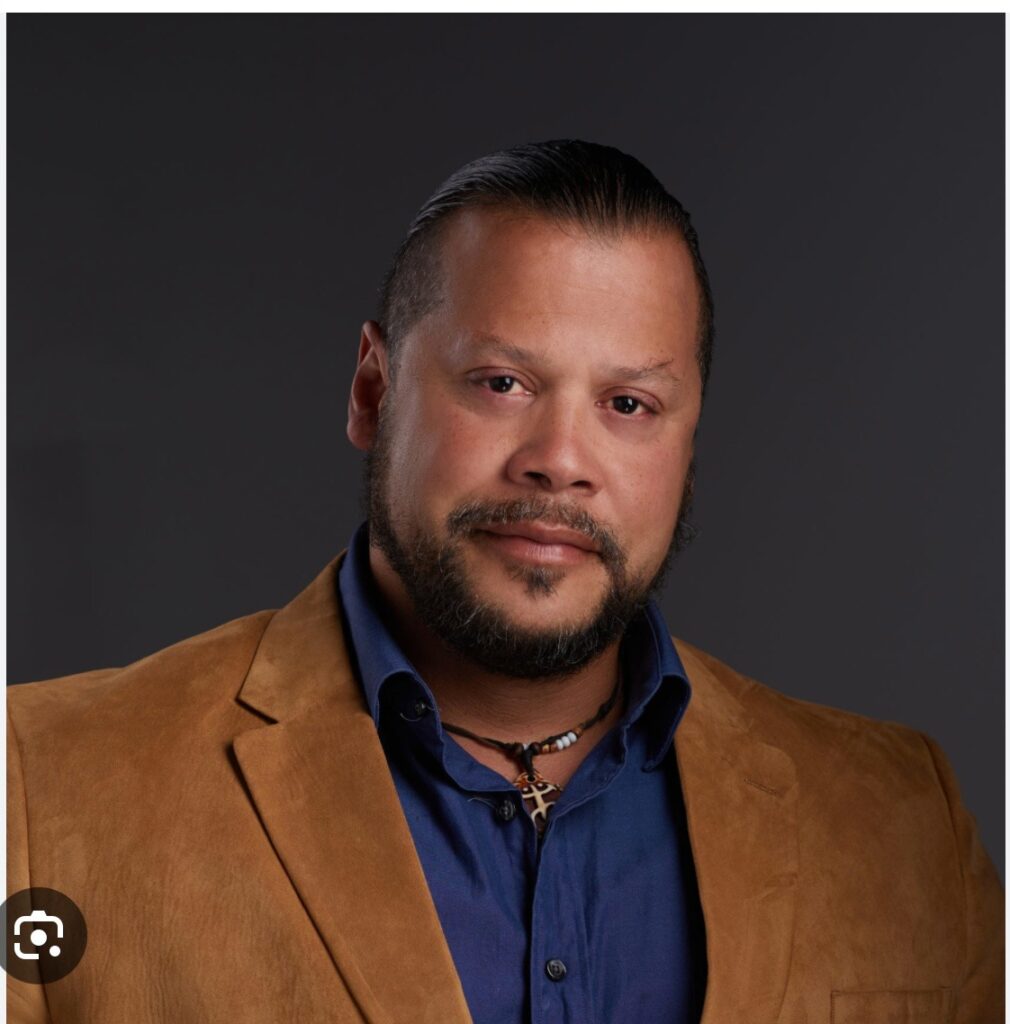
Walter “Gualterio” Alomar is more than just OCHO’s president; he is also a political activist, cultural advocate, and filmmaker. He has been married for 20 years and has 4 children, 3 girls and 1 boy. A dedicated family man, he works tirelessly to create a better future for his children and his community. His family is originally from San Antón, Puerto Rico (PR), and he grew up in the Hunts Point area of the South Bronx in New York City. He described it as a small piece of home, steeped in Puerto Rican culture.
He was originally interested in getting involved in politics, determined to help strengthen and improve his community. While learning about what a role in politics would require, he became interested in the political history of his homeland. What he learned left him deeply unsettled: the strained relationship between the US and Puerto Rico, the bans on teaching in the native Spanish Language, the forced sterilization of women, and the rules against flying the Puerto Rican flag. He wondered why this information was not being taught in the US and realized that more people needed to know about what had happened and was currently happening in his homeland. But how?
In 2015, Alomar founded the Organization for Culture of Hispanic Origins (OCHO). Despite not knowing how to run a non-profit, he built the organization from the ground up, learning things along the way. OCHO provides communities with educational and assistance programs. This includes mental health assistance, substance abuse counseling, volunteer activities, seminars, and workshops. To keep up momentum, OCHO often works with other groups and organizations that share its goals.
Knowing that education was the true key to success, he focused on ways to reach a younger audience. For that, he took to the big screen, releasing his documentary Colonization is Extinction in 2018. The project took over 4 years, as he wrote, produced, and edited the film himself. It aims to teach future generations about Puerto Rico’s government and economic crisis through the lens of US colonization. It uses “expert interviews, footage from various political and community events, and historically archived media.”
He was also involved with the production of Edwin Freeman’s documentary Modern Day Slavery: From Plantations to Prisons, which explores the exploitation of African American and Latino prisoners by the United States’ justice system. He describes the documentary as an “eye-opening, hard-hitting piece… that uncovers the truth” about the economic factors involved in the disproportionate incarceration of people of color. The film uses multiple interviews to relay the personal experiences of those involved in the system, from judges and lawyers to former inmates and correction officers.
With the rise of social media and the younger generation’s attachment to screens, he hopes that films will reach a wider audience and help spread awareness. He plans to shift from documentary to movie with his next project, which is still in the planning stage. Both of these documentaries are available to stream on Amazon, Tubi, and YouTube.
Immediately after Hurricane Maria devastated Puerto Rico in September 2017, Alomar was sent to help restore power to the island due to his experience working as a lineman. “Utility companies have what is called a mutual aid contract with other neighboring utilities so if there is a problem… We’ll lend a hand. I’ve been to California during the wildfires, I’ve been to [New] Jersey, Connecticut, [and] down south.”
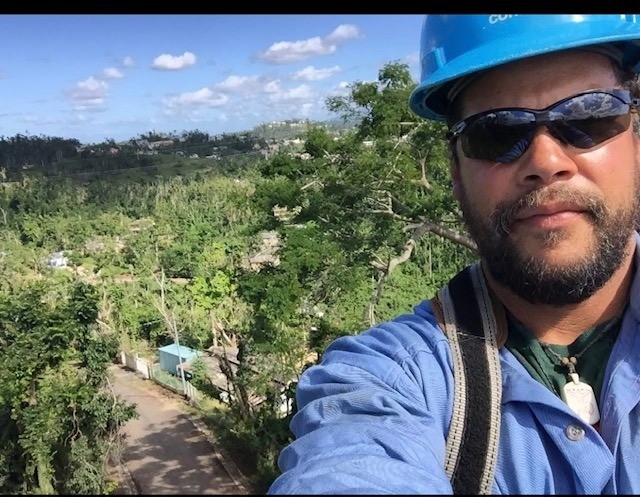
Upon traveling to Puerto Rico, he described the devastation as “beyond belief. It was like a bomb went off.” While many people in the US saw footage on the news, seeing it in person was absolutely heartbreaking. “People were left with nothing, no clothes, no homes, no food, no water, nothing. That was the hardest part when we first got out there… just seeing the devastation. And the people see you and they see the utility company and they kind of light up,” knowing that they were there to help. “We received so much love and attention from everybody in the community… It was quite an experience, [one] I’ll never forget.”
He shared the story of how the home of an elderly man, reduced to little more than a frame and roof, would have been left the only one without power in the neighborhood had it not been for his and his partner’s creative solution of wiring an extension cord directly into the electrical line. While the experience was difficult, it was also one of the most meaningful and fulfilling moments of his time there.
He was supposed to be in Puerto Rico for a year, telling his family, “If I have to be there for the year, I’m gone. This is my land, this is my people… they are at their lowest point… I cannot abandon my people in their time of need.” He was willing to stay on the island for as long as it took to do the work.
With many linemen from across the country in Puerto Rico, when a strong winter storm in Westchester, NY, left many US residents in the dark, complaints from residents put pressure on political leaders, who soon forced utility companies to send workers back, including Alomar. Though it took only a week for the team to completely restore power at home, he wasn’t sent back to Puerto Rico as expected. It took a year for the island’s power to be completely restored. Alomar stated, “That would never happen anywhere else. These are American citizens… Manhattan would never be without power for a year.”
Feeling that his job was unfinished, he hosted a Comic Relief for Puerto Rico event in 2018 to raise funds to further aid the people of Puerto Rico.
In 2021, OCHO installed a memorial monument for the victims of Hurricane Maria at Taino Towers. He said this location was chosen because of its historical ties to the Puerto Rican community, and OCHO wanted the monument to be in an area where it would be appreciated.
It prominently displays the number 4645, the public number of victims at the time, and an inscription reading, “Designed and Erected by Walter and Jessica Alomar of OCHO and Maria Cruz of Taino Towers to honor the victims of Hurricane Irma and Maria, September 20, 2017.”
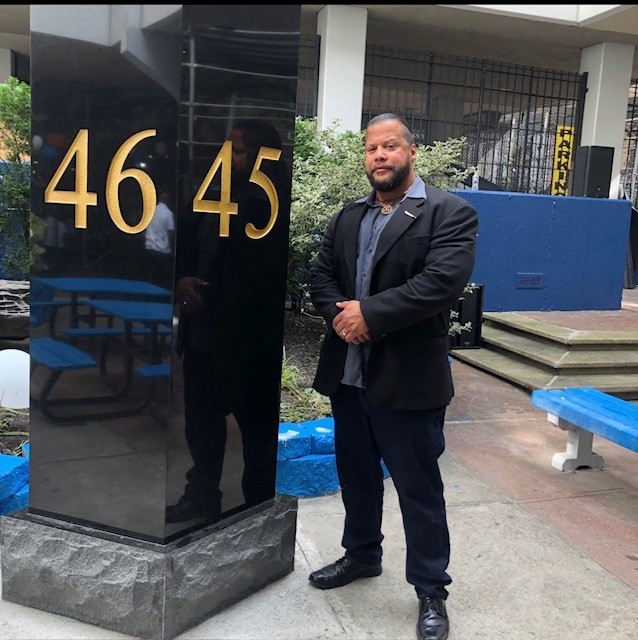
He expressed his sincere gratitude to Maria Cruz, the retired executive director of Taino Towers, for all the support he received while working on this project. Beyond giving permission to use the location, Cruz has also been a strong supporter of OCHO and a respected advocate for the community.
The unveiling of the monument was Alomar and OCHO’s most successful event, with news agencies and celebrities in attendance. Families that were displaced by the hurricanes were invited to share their stories, and a moment of silence was held for the victims. OCHO has held anniversary events each year when the area allows it. Currently, OCHO is working on a 10th anniversary event for the monument. With the help of the Hispanic Bar Association of New Jersey, OCHO aims to bring attention to “what the future looks like for Puerto Rico’s [power] grid.” He hopes the event will represent the resilience of the Puerto Rican community and honor those who lost their lives.
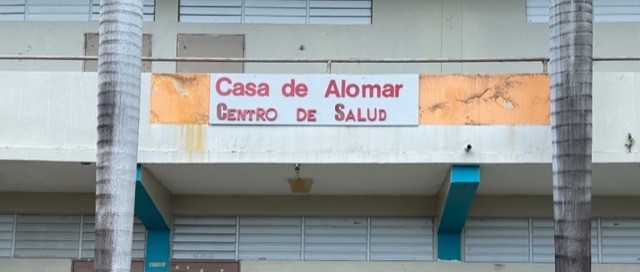
OCHO is also working on a very important project in Juana Diaz, PR, turning an abandoned school into a desperately needed community center. Casa de Alomar would improve the quality of life for locals through education programs, mental health assistance, job training seminars, and senior activities. This community center will provide vital assistance to those in the area, and any donations made to OCHO will go towards this cause. In the future, Alomar plans to create a website dedicated to the project, where people can follow the progress and show their support.
For the last 6 years, Alomar has made his voice heard at many United Nations councils, including the UN Decolonization hearings for Puerto Rico every year since 2018, where he shares his opinion about independence for Puerto Rico and what the future of the island should look like. He explained that while real change takes time, attending these hearings is about “being at the table” and getting to have a voice. He’s had the opportunity to meet world leaders and make new connections, which will help him achieve his goals.
He will continue his goal of educating people about Puerto Rico and its history, hoping that if enough people learn, they can take a firm stance regarding the future of the island. He knows that the current method is not working, and while change will take time, it is ultimately worth any sacrifice. “I love my people, I love my island, and I just want what’s best for it.”
Alomar is dedicated to making his community a better place and helping those in his homeland of Puerto Rico recover and thrive after the hurricanes. You can follow his progress and the inspirational work of OCHO through their website.
