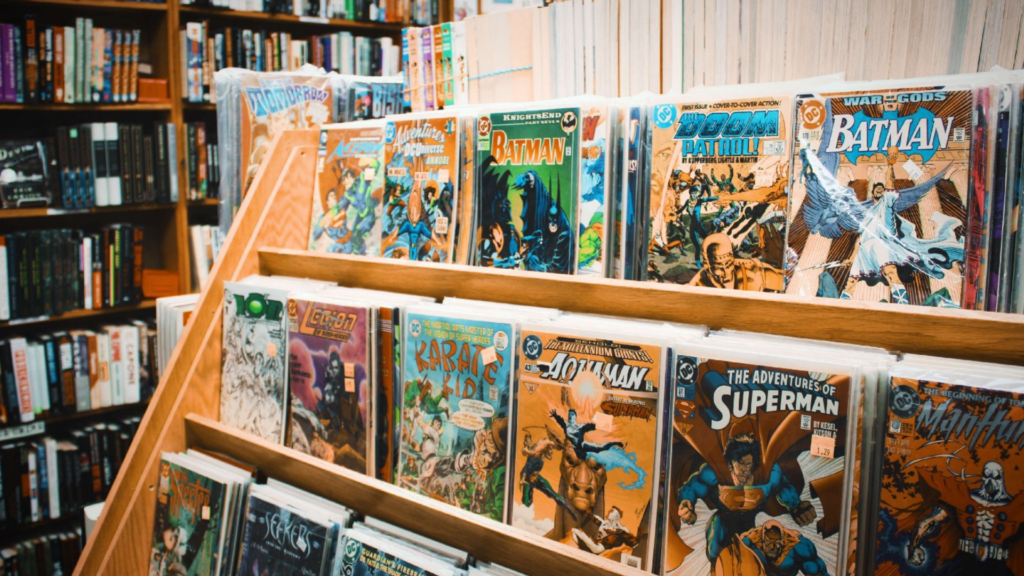
In a society where we value the educated class, by giving those with better degrees higher salaries and more credibility, we are often too quick to sneer at the underappreciated gem that fuses art and literature, graphic novels. In our society, we are taught to esteem ourselves on things like our grades, reading levels, advanced vocabulary, and overall intellect. We are told to read the classics and books that are on par with this standard, leaving comics and graphic novels to waste away with the picture books of our childhoods. After all, that’s all they are, right? Picture books? Far too simplistic and remedial to have any real substance, right? Wrong.
When we minimize the importance and relevance of graphic novels, we undercut the accomplishments of others: like the artists who spent years creating stylistic storyboards to match the tone of the story. Or the writers who carefully curate engaging stories simply through dialogue. Or even the readers, who maybe can’t get into a normal book the way they can a graphic novel. Graphic novels are a really important medium of literature because they serve as a gateway between the world of literature and art and that of the reader who loves stories but hates books.
It may sound ironic, but yes, we do exist. It’s not that I hate reading. It’s quite the opposite, actually; I love reading and pride myself on how much literature I can consume, but there is something so stifling to me about reading normal books. They lack the wow factor that graphic novels have. The art.
Art is really the only thing that differentiates graphic novels from others, but it makes such a huge difference when it comes to how information is communicated. The additional visuals that graphic novels present to readers can be helpful for those that have a harder time creating mental images, like those with aphantasia, or for those who simply don’t have the attention span or patience to read an entire paragraph describing the way a room looks.
The added visuals convey more information quickly and enable writers to cut to the chase- that is- to focus on the plot. They allow readers to better understand complex themes and emotions. With normal books, readers can sometimes lose track of the tone of a situation, like if the dialogue is dry or has a lot of sarcasm but lacks tone indicators. Graphic novels eliminate this issue entirely by showing the characters’ emotions through facial expressions and even through things like background color, speech bubble shape, or common graphic symbols like the cruciform popping vein or sweat drops (learn more about these here).
In fact, graphic novels often add to emotional expression through the elements of art, as art plays an equally (if not more) important role in communicating the story as written information. Elements like color, line, and shape, are key in communicating the unspoken emotions characters may be feeling (something that can be harder to pick up on in normal books). Author and illustrator Tillie Walden exemplify this beautifully in her book, “Are You Listening?” She creates a landscape that shifts and changes as the story progresses, matching the emotions of the characters and mirroring the actual shape of Freytag’s Pyramid (a basic story structure consisting of an exposition, inciting action, rising action, climax, falling action, and a resolution). Now obviously, not all important stories that people should read are going to (or necessarily can) be communicated in graphic novel format. But by having access to graphic novels, readers can explore a wide range of genres until they figure out what they like, which could lead to them exploring other books that aren’t graphic novels, thus bridging the gap between readers and all that literature has to offer. Because graphic novels can be used to tell stories in any genre, they serve as an entry point for many young readers into a world of stories, truly acting as a gateway to reading.
