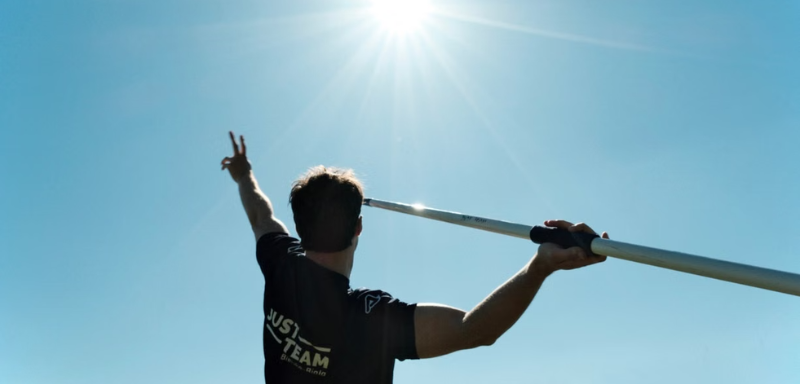

For Filipino pole vaulter EJ Obiena, representing his country on the international stage is about more than competing for medals. During his international pole vault meets, Obiena has chosen to play original Pilipino music, or OPM, as a way to introduce audiences around the world to another part of Filipino culture.
Obiena’s decision to bring Filipino music to his competitions adds a personal element to his performances. Pole vaulting is an individual sport that often focuses on an athlete’s height, technique and results. By playing OPM, however, Obiena is creating an opportunity for Filipino culture to become part of the atmosphere surrounding his competitions.
For Obiena, the music represents where he comes from. While athletes commonly represent their countries through uniforms, flags and national colors, he is finding another way to do so. The songs allow him to share something familiar from home with spectators who may have little exposure to Filipino music.
The choice is also significant because Obiena has become one of the Philippines’ most recognizable athletes. His success in pole vaulting has helped bring attention to a sport that does not traditionally receive as much attention in the Philippines as sports such as basketball and boxing. Earlier this year, Obiena opened his outdoor season with a silver-medal performance in Düsseldorf, continuing his career as one of the country’s leading track and field athletes.
His use of OPM demonstrates how athletes can use their platforms for more than competition. Sports provide athletes with an international audience, and Obiena is using that audience to highlight an important part of his identity. Instead of simply competing under the Philippine flag, he is allowing Filipino music to accompany him while he competes.
Music can also create a connection between an athlete and supporters watching from home. For Filipino fans, hearing familiar songs during an international competition can make Obiena’s performances feel more connected to the Philippines, even when he is competing thousands of miles away.
Obiena’s approach also shows the relationship between sports and culture. Athletes often become representatives of their countries, whether intentionally or not. Their performances can introduce international audiences to their nations, but cultural choices can make that representation more personal and meaningful.
As Obiena continues his international career, his performances will remain focused on clearing higher bars and competing against the world’s best pole vaulters. But the OPM playing in the background gives his competitions another purpose: sharing Filipino culture with people who may be hearing it for the first time.
Ultimately, Obiena’s decision shows that representing a country does not always have to come through a medal or a record. Sometimes, it can come through music. By bringing OPM to international pole vault competitions, Obiena is turning his athletic platform into an opportunity to celebrate the Philippines and share a piece of home with the world.